

Ofua, Rhino Camp Refugee Settlement, 6 November 2025. Refugee-led organizations in Ofua Zone of Rhino Camp Refugee Settlement, West Nile, came together for a Local Refugee-Led Partners Showcase, bringing together community-driven work in cultural heritage, innovation, livelihoods, youth empowerment, and peacebuilding.
Co-organized by Refugee House Foundation in collaboration with refugee-led partners, and with support from UNHCR, the Office of the Prime Minister (OPM), and other partners, the showcase provided a platform for refugee-led organizations to present practical solutions and community initiatives developed by and for refugee communities.
Held at the ISCORE Multipurpose Community Centre (MCC) in Ofua, the event demonstrated the growing role of refugee-led organizations in identifying community priorities, developing local solutions, and creating opportunities for refugees and host communities.
The showcase was organized around three interconnected themes: Song Heritage and Culture, Innovations and Livelihoods, and Peacebuilding.
The event created space for participating organizations to move beyond conventional presentations and demonstrate the stories, ideas, skills, and innovations emerging from refugee communities.
For Refugee House Foundation, the showcase reflected the importance of creating spaces where refugee-led organizations can share their work, learn from one another, build partnerships, and influence conversations about the future of refugee communities.
Community Development Centre (CDC) opened the showcase with its Storytelling as Safeguarding: Protecting South Sudanese Women’s Cultural Heritage in Uganda and Kenya project. The initiative was jointly implemented by Community Development Centre (CDC) Uganda and the Likikiri Collective, which served as the lead organization and grant recipient under the British Council Cultural Protection Fund.
The project focuses on protecting and preserving South Sudanese women's cultural heritage in refugee settings in Uganda and Kenya.
Through the project, young refugees worked with elderly women in story circles to document traditional songs and cultural knowledge. More than 400 traditional songs in Dinka, Nuer, Kakwa, and Avokaya were recorded and preserved.
The presentation combined a documentary, podcast materials, photographs, community stories, music videos, and selected traditional songs. It also highlighted the experiences of young women who participated as researchers and storytellers, demonstrating how cultural documentation can become a pathway for intergenerational learning, leadership, and empowerment.
Refugee House Foundation extends its appreciation to the CDC Uganda team and the Likikiri Collective team, led by Executive Director Mr. Elfatih Atem (Elfatih Maluk Atem Beny), for their contribution to preserving and promoting South Sudanese cultural heritage.
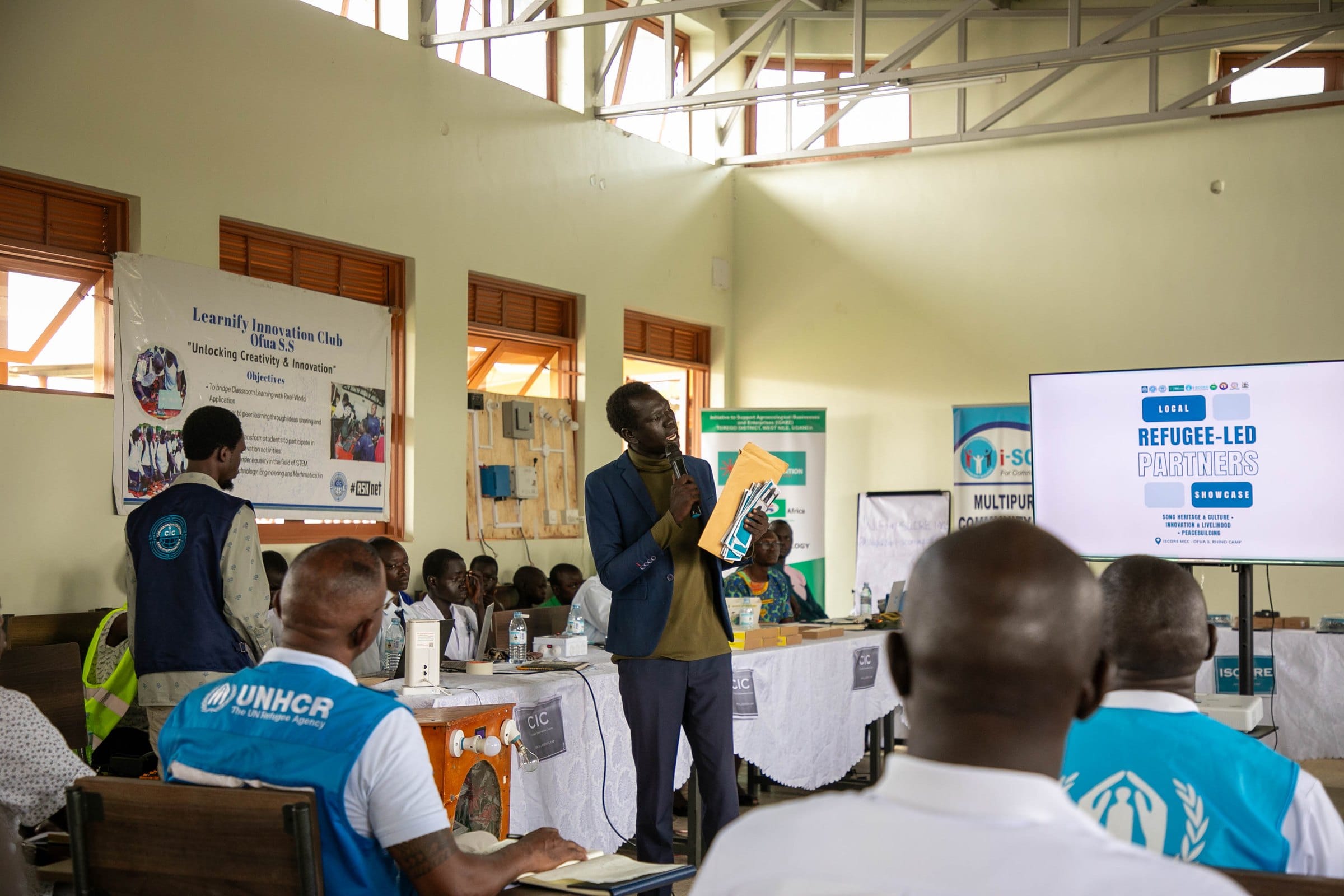
Community Innovation Center (CIC) showcased how young refugees are using technology and technical skills to respond to everyday challenges.
Among the innovations presented were an Automatic School Bell System, a Motorcycle Alarm System, and Smart Harvest, an IoT-based agricultural system designed to monitor soil moisture and support efficient irrigation.
CIC also highlighted skills development in solar installation and phone repair, demonstrating how technical training can support employment, entrepreneurship, and self-reliance among young people.
These innovations illustrated that refugee communities are not only recipients of services but are also developing practical technologies and enterprises that respond to local needs.
ISCORE presented its work managing Multipurpose Community Centres and Youth/Job Centers in Ofua and Imvepi.
The centres provide spaces where refugee and host-community youth can access skills development, employment-related opportunities, community activities, and social connections.
The presentation highlighted the role of such spaces in creating opportunities for young people to learn, build confidence, develop livelihoods, and participate actively in their communities.
Dynamic Action for Peace and Rehabilitation (DA4PR) demonstrated how creative approaches can contribute to peacebuilding and social transformation.
Through forum theatre, community drama, and music, DA4PR creates spaces for communities to discuss sensitive issues, reflect on challenges, and develop locally relevant solutions.
The organization also presented its work in livelihoods, agriculture, agroecology, environmental conservation, and access to land, showing the links between peace, environmental sustainability, food security, and economic opportunity.
Meanwhile, the Rhino Refugee Active Peace Building Initiative (RRAPBI) presented its restorative justice approach to peacebuilding in schools, communities, and local leadership structures.
Its work focuses on resolving conflicts, rebuilding relationships, promoting accountability and forgiveness, and strengthening peaceful coexistence between refugees and host communities.
The final presentation brought together Gala Happy Hill Orphanage (G2HO) and Youth Empowerment Matters Uganda (YEMU).
The organizations shared their work supporting children and young people through education, mentorship, life skills, technology, phone repair, entrepreneurship, and practical skills development.
Their joint showcase emphasized the importance of equipping young people, particularly vulnerable youth, with skills and opportunities that can contribute to sustainable livelihoods and greater self-reliance.
Throughout the showcase, one message stood out: refugee communities are actively shaping solutions to the challenges they face.
From preserving traditional songs and stories to developing digital technologies, creating livelihoods, supporting young people, and building peace, refugee-led organizations are contributing to the social and economic development of their communities.
For Refugee House Foundation, this is at the heart of its work.
As a refugee-led organization, Refugee House Foundation believes that refugees should not only be viewed through the challenges they face, but also through their ideas, abilities, leadership, creativity, knowledge, and potential to contribute.
The Local Refugee-Led Partners Showcase provided an important opportunity to make that potential visible.
The event also created an opportunity for refugee-led organizations, UNHCR, OPM, and other partners to connect, exchange experiences, and identify opportunities for greater collaboration.
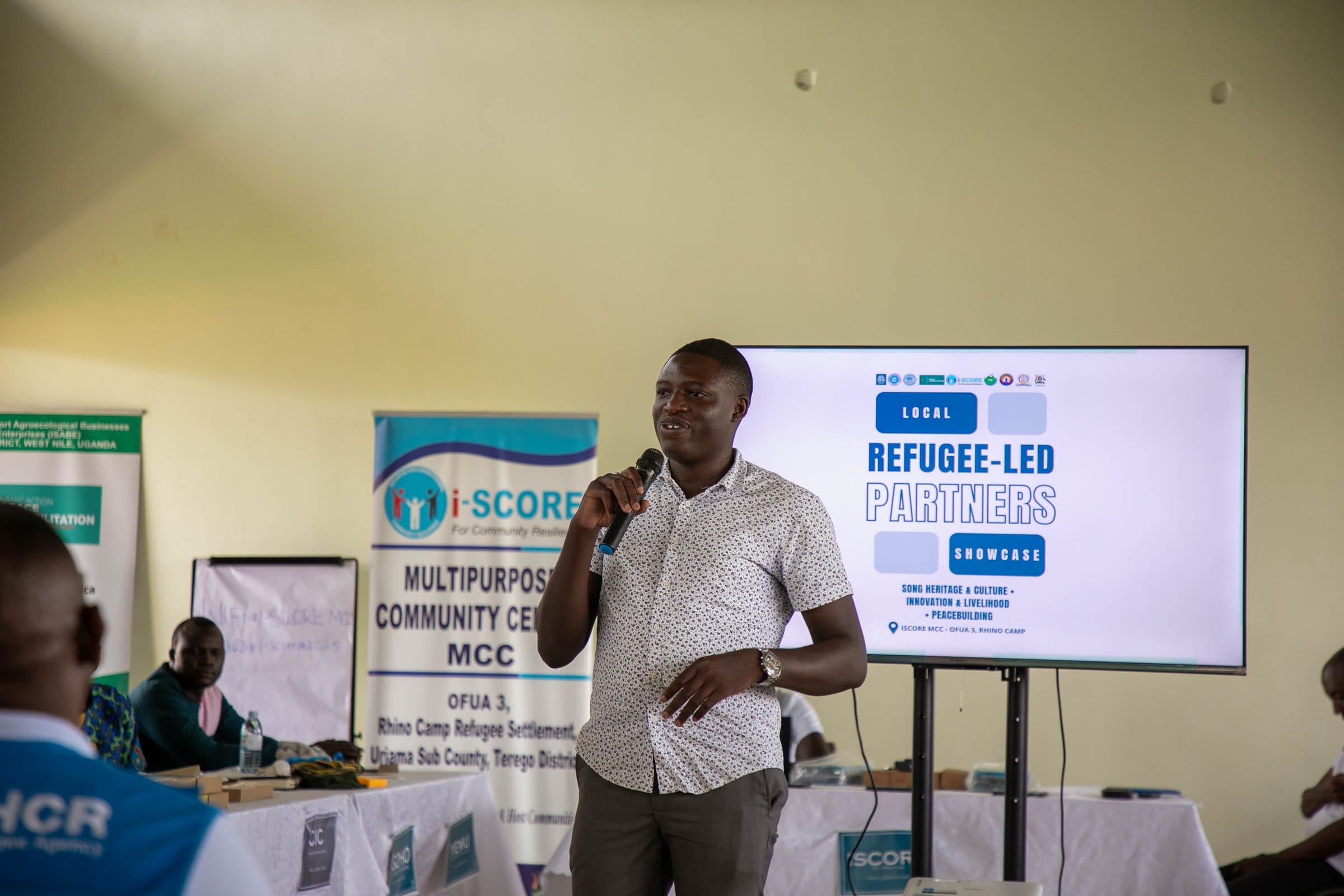
The event was attended by the UNHCR team, with the presence of Mr. Paul Kenya, Head of the UNHCR Sub-Office in Arua, and Mr. Wejuli Victor Nicodemus, Assistant Settlement Commandant representing the Office of the Prime Minister (OPM). The event also brought together members of the Community Services Team, DRC, Windle International, other international and local operational partners, and representatives of refugee-led organizations (RLOs) and community-based organizations (CBOs).
Since his arrival at the UNHCR Arua Sub-Office, Mr. Paul Kenya, Head of Sub-Office, has demonstrated a personal commitment to supporting refugee-led organizations and advancing localization. His engagement has contributed to creating opportunities for refugee-led organizations to amplify refugee voices and strengthen their contribution to community development, dignity, self-reliance, and meaningful participation.
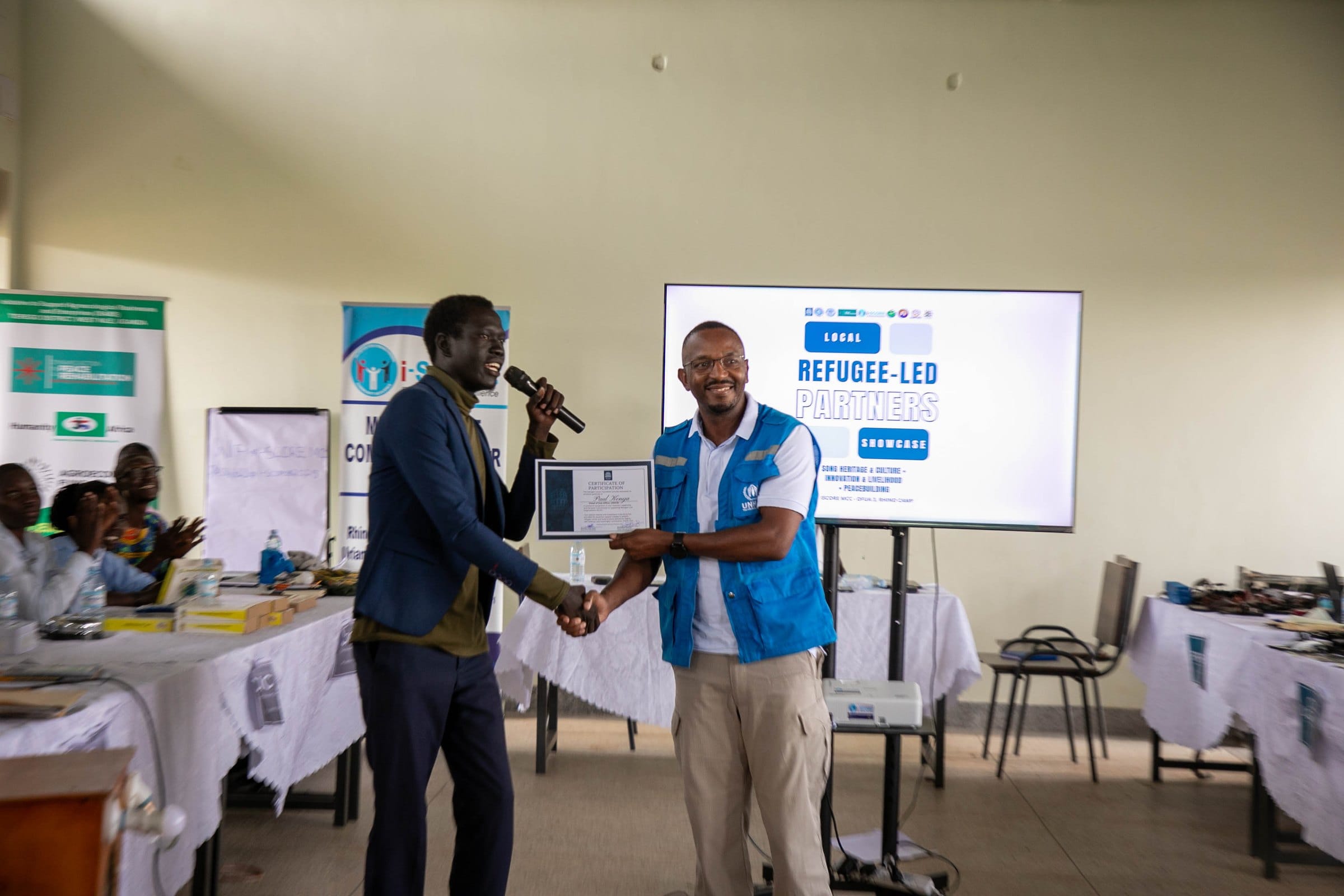
Recognizing this commitment, Mr. Ronald Ladu, Executive Director of Refugee House Foundation, presented Mr. Paul Kenya with a Certificate of Appreciation in recognition of his support for refugee-led organizations and his commitment to localization.
A separate Certificate of Appreciation was also presented to the UNHCR Sub-Office in Arua, in profound recognition of its commitment to refugees in Uganda and its support for localization under the leadership of Mr. Paul Kenya.
The recognition was a reflection of the importance of partnerships that create space for refugee-led organizations to participate meaningfully in shaping responses and solutions within their communities.
By bringing different organizations together in one space, the showcase demonstrated the value of collaboration among refugee-led initiatives working across culture, livelihoods, innovation, youth empowerment, and peacebuilding.
Refugee House Foundation looks forward to continuing to support spaces that amplify refugee voices, strengthen refugee-led organizations, and connect community initiatives with partners and opportunities.
The showcase was more than an exhibition of projects. It was a reflection of what refugee communities are already building for themselves and for the wider communities in which they live.
Refugee-led. Community-driven. Locally rooted.

